 True Life School
 A school like no other.
In the morning — 2 hours of 1-on-1 learning with a personal tutor: their own level, their own pace, no waiting for the rest of the class. In the afternoon — what stays for life: people, projects, cooking, making things and coping when something goes wrong.
Do the math
The most expensive thing in school is the one you can't see: wasted time.
Seven hours bell-to-bell. Inside them: roll call, waiting for the class to settle, copying from the board, a pace set for the average. That is why so many families pay twice — once with the school day, and again for evening tutoring.
Nobody measures the difference. So nobody fixes it.
The mechanism
The 2+5 Model: flip the school day right side up.
Technology personalizes the learning
the platform runs the morning block 1-on-1: it sets the level, pace and tasks, catches gaps before the test does, and shows you exactly what your child has mastered. When the platform is not enough, a live teacher joins online the same day.
People take care of the child
A human guide sits beside your child every day — watching motivation, focus and friendships. Technology never replaces care; it gives the adults time to actually provide it.
The afternoon builds a person
Five hours a day for what actually shapes adults: cooking, building, negotiating, failing safely and trying again. Every activity ends with something your child made or did — not a worksheet.
Why 1-on-1? In Benjamin Bloom's famous 1984 studies with human tutors, the average student tutored one-on-one performed better than 98% of students taught in a conventional classroom — the "2 sigma" effect. Personal tutoring was always the best way to learn. It was just too expensive to give every child. Until now.
What we remove
No grades. No tests. No traditional teachers.
We remove what measures the wrong things — and keep what actually grows a child.
Grades
Progress tracking
Instead of a mark at the end of term, you see day by day what your child has truly mastered and where a gap is forming. Progress, not a label.
Tests and quizzes
Learn until you truly know it
No cramming for a test and forgetting it a week later. A child moves on only once they have genuinely mastered the topic — at their own pace.
One teacher for 25 kids
Learning 1-on-1 + human guides
Instead of one teacher for 25 children: personalized learning with the learning platform and a human guide who looks after motivation, relationships and safety.
Two languages, any system
Learning happens in English. Exams happen wherever you choose.
English isn't a subject here — it's the language of the day. Lessons, projects and conversations on campus run in English, and most of our staff are native speakers. Your child doesn't study English. They live in it — and one day simply starts speaking.
English is the language of the campus
Not 45 minutes twice a week. Morning briefing, project work, lunch table, afternoon workshops — the whole day happens in English.
Mostly native-speaker staff
Your child hears real accent, real idiom and real humor every day — from adults for whom English is simply their language.
Polish stays fully at home here
Polish language, literature and history are taught properly — a bilingual child gains a second language without losing the first one.
And the diploma? You choose the system — the campus stays the same.
Polish system
Eighth-grade exam · matura
We cover the Polish national curriculum, and your child sits the state exams like any homeschooled student — with a Polish school certificate at the end.
British track
IGCSE · A-levels
International exams recognized by universities worldwide — the standard route for families who are not sure which country their child will study in.
American track
US high school diploma
A diploma issued through a US partner school, honored in American admissions — for children who are aiming across the ocean.
You pick the track when you enroll, and it can change as your plans change. We confirm which international tracks are available at each campus before it opens — and say so honestly on every city page.
One membership
One enrollment. Every campus we will ever open.
This is the network we are building: one membership that will work at every campus. Want your child to spend three months at a future Tenerife campus, then come home? That is exactly what the network is designed for. The school will travel with the child — not the other way around.
Planned directions. The network will grow campus by campus — starting where enough families sign up.
The model, made visible.
The space, the guides and a real day — visualized.
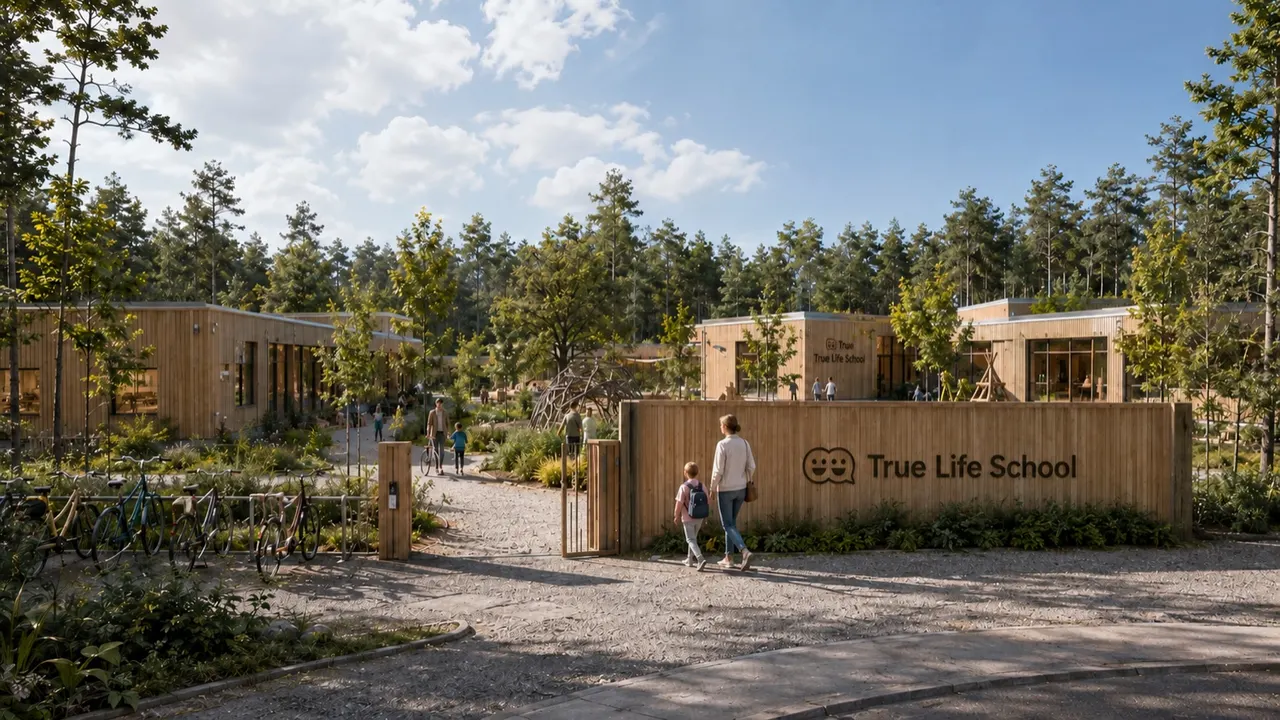
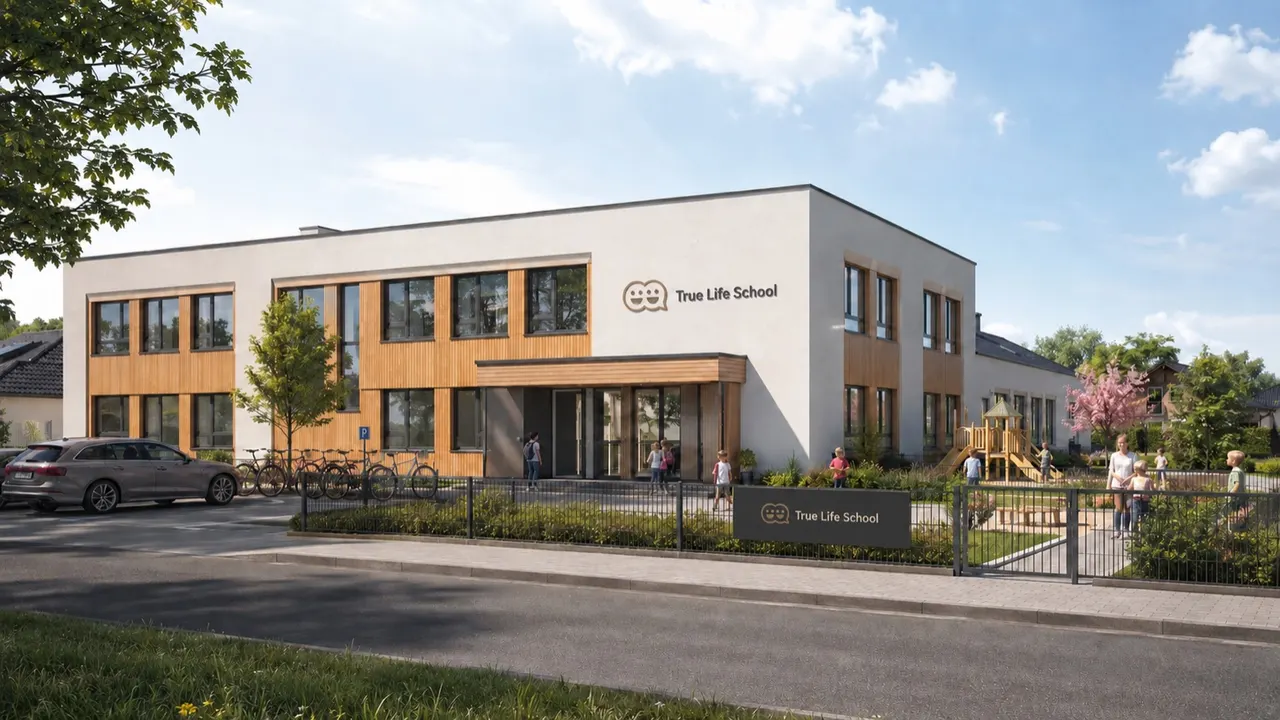
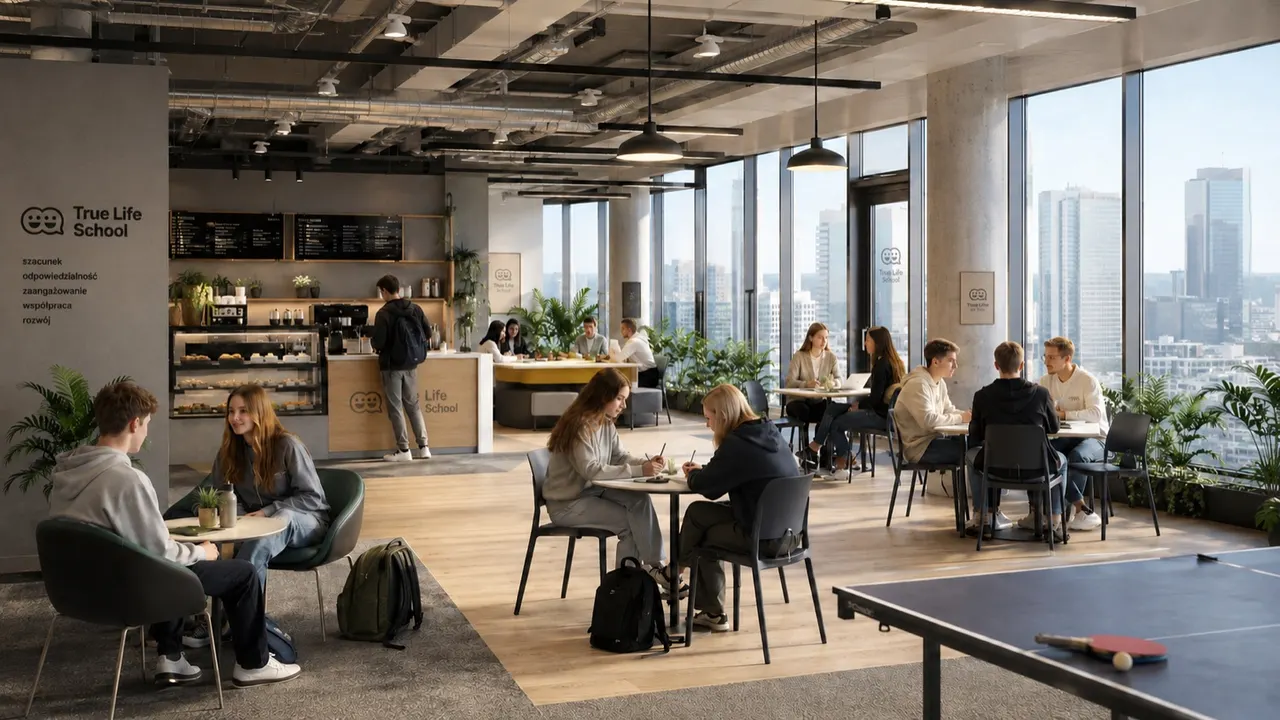
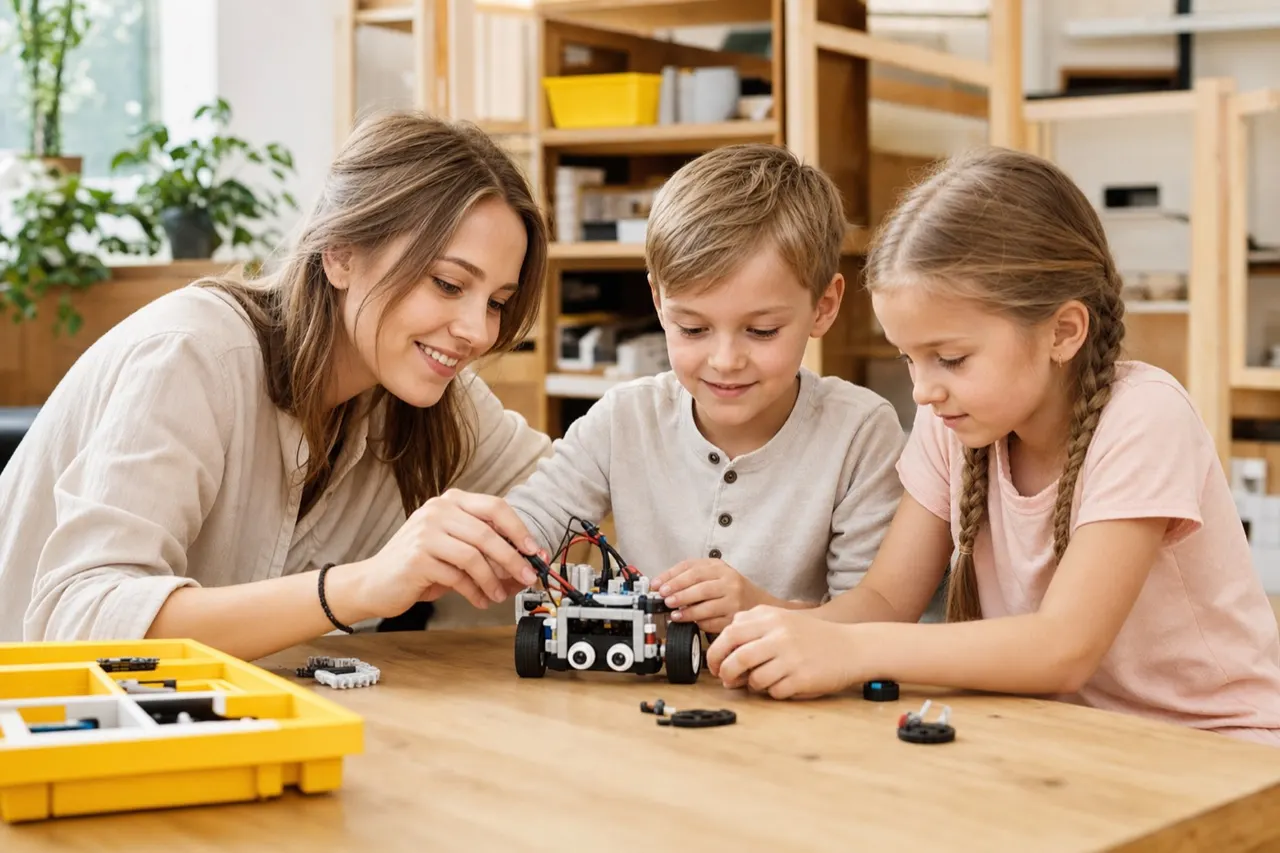
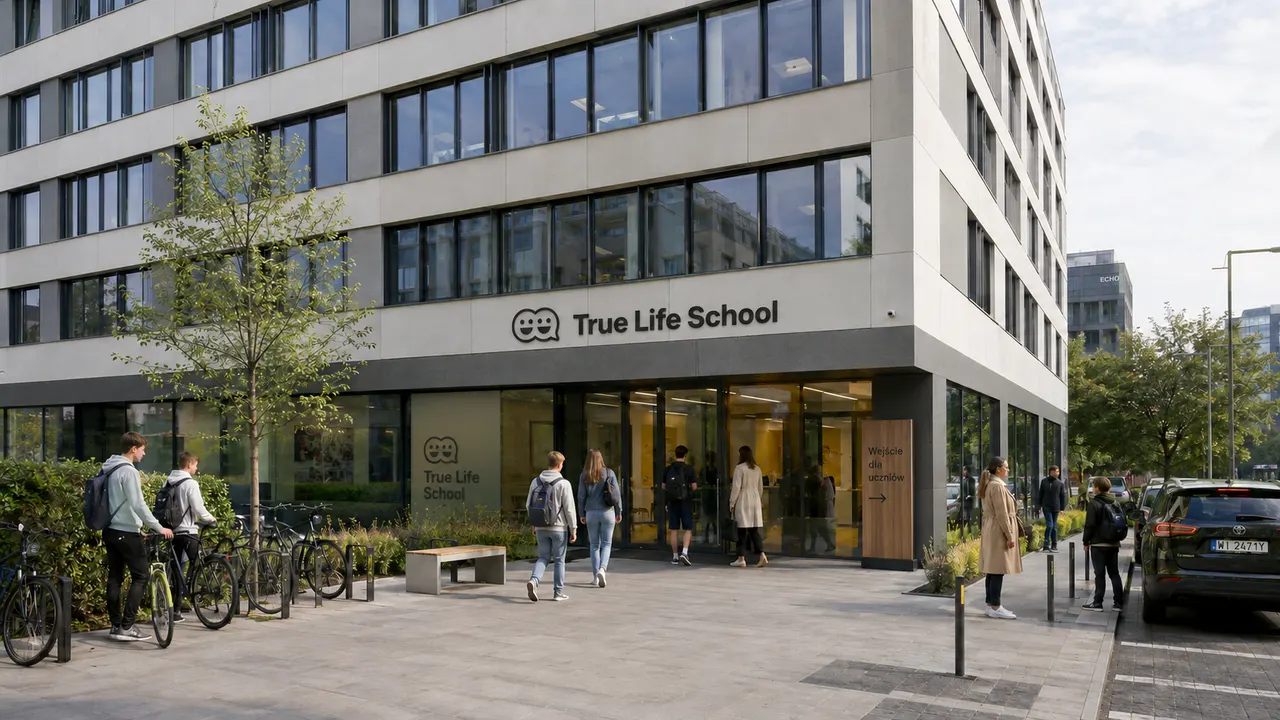
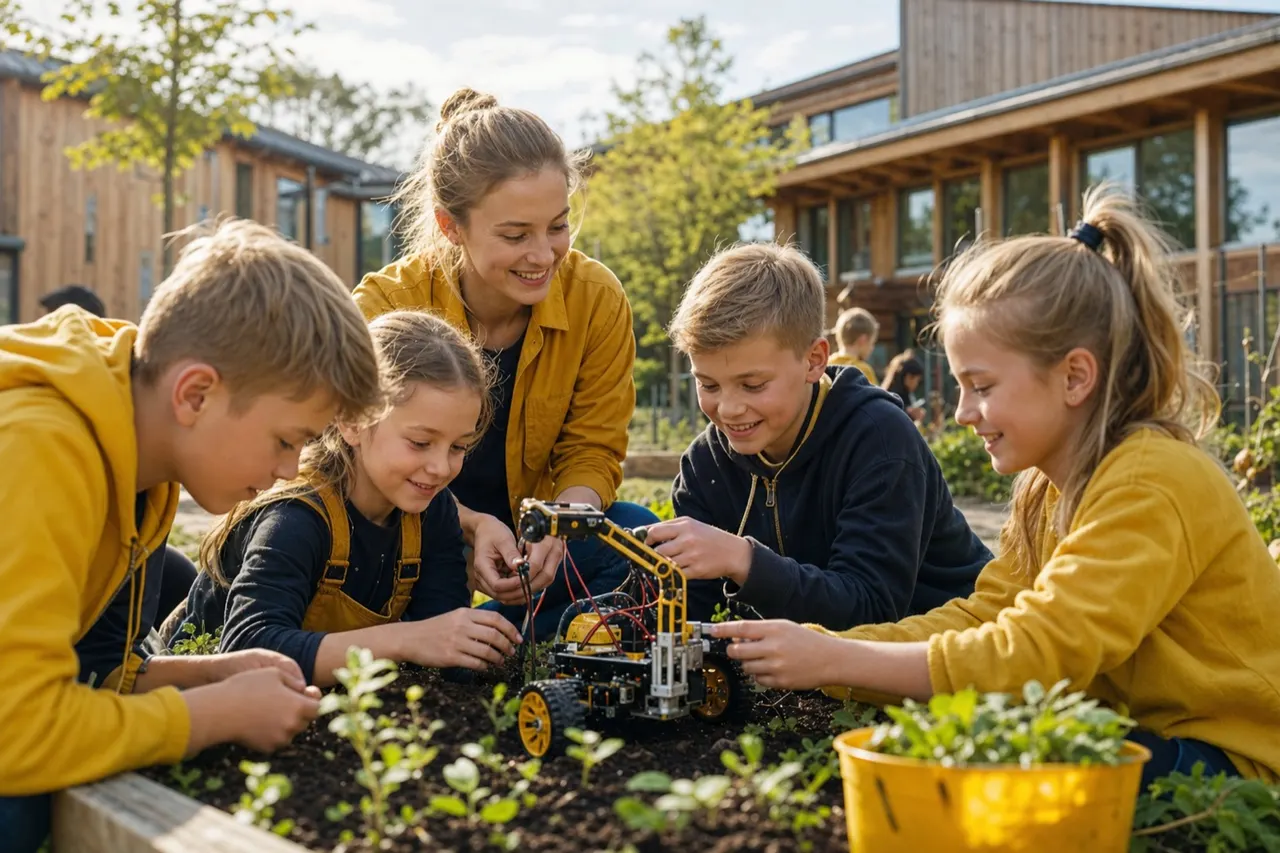
Concept visualizations.
A day you can actually picture.
Example schedule. The exact plan varies by campus and age group — the principle stays: focused personalized academics first, then a rich, human day.
What the afternoon looks like — a few examples.
Concrete activities from different domains — each ends in something your child actually made or did.
A jar of their own honey
They run a school beehive with a beekeeper for a full season. The finale: harvesting honey into a jar with their own label.
🍯 A honey jar with their own label
A film in 48 hours
Crews write, shoot and edit a 3–5 minute film in one weekend. The finale: a premiere on the big screen, audience and applause included.
🎬 A premiere before an audience
A first company before thirteen
They launch a mini-company, sell at the fair and settle a real profit or loss. At dinner you'll hear: 'I sold out and made 47 zloty.'
💶 A first profit, accounted for
100,000 zł on the market (simulated)
They manage a 100,000 zł portfolio on real market data and write an investment report. Here, losses teach for free.
📈 An investment report on real data
A mediator for real conflicts
Trained student mediators run shifts and resolve school conflicts themselves. An adult only watches from the side.
🕊️ Mediations they ran themselves
An expedition, map to campfire
They plan the route, pack the gear and complete a bike trip or an overnight camp. The weather won't always cooperate — that's the point.
⛺ A night out they planned themselves
Our learning platform shows what a normal report card misses.
You and the guide can see what your child has mastered, where a gap is forming, what affects focus and which next step matters most.
- A learning path matched to your child, with practice that reacts to progress
- Gaps caught early — not only after a test
- Simple views for parent and guide
Updated today · Next guide check-in: Thursday
Focused learning this week
Focus area: Fractions
- Halves and quarters with pictures
- A short explainer on the platform
- A 5-minute check quiz
 Tutor
Tutor Solve for x. I drew it on the whiteboard — think about what you need to do to both sides.
First I subtract 5 from both sides: 3x = 15. Then I divide by 3, so x = 5!
Perfect reasoning — you kept the balance. Let's check: 3·5 + 5 = 20 ✓. Ready for one with a fraction?
Read this fragment and tell me: is the narrator inside the story or outside it? How do you know?
"I watched the ship disappear behind the horizon. My hands were shaking, though I couldn't tell if it was from cold or fear."
The narrator is inside — she says "I watched" and "my hands". She's also telling us what she feels, so it's first person.
Exactly — first-person narrator with limited knowledge. Notice she says "I couldn't tell" — she doesn't know everything. How would this scene change if someone outside told it?
💡 Try rewriting it in third person — what changes?Read the passage carefully. Then answer — the answer is NOT written directly in the text. You need to figure it out.
"Sarah put on her warmest coat, grabbed an umbrella, and sighed as she looked out the window. The trees were bending sideways."
What can you infer about the weather?
Your diagram is correct. Now predict: if one car is heavier, will the forces still be equal?
The first step is free
A campus starts with families, not a building. Sign up now.
We open in cities where enough families raise their hands. The waitlist is that signal — and the families on it get everything first. The first cohorts in each city will be small.
- Priority access to platformie do naukiyour child can start the morning learning block before any campus opens
- An Experience Day invitationyour child lives one full day of this school before you decide anything
- Parent briefings in your citystraight answers about the program, safety and the legal model
- A real vote on the mapcities with the biggest lists get their campus first
Free and non-binding. Not an enrollment, not a payment — a signal. If it's not for you, one click removes you.
Choose your city — that single click moves it up the queue.
Warsaw
Collecting InterestLondon
Collecting InterestBerlin
Collecting InterestKraków
Collecting InterestWrocław
Collecting InterestPoznań
Collecting InterestGdańsk
Collecting InterestDubai
Collecting InterestLisbon
Collecting InterestFair questions
Everything a careful parent should ask first.
2 hours of one-on-one, personalized work is not the same currency as 2 hours in a class of 25. There is no waiting, no repeating mastered material, no pace set for someone else. The core academics fit — and the rest of the day is not "time off", it is projects, movement, relationships and life skills.
The learning block takes about two hours and is split into short sessions with breaks — for the youngest children it is shorter still, with part of the practice happening away from the screen. The rest of the day is deliberately screen-free: projects, movement, people. In total, that is less screen time than at a typical school with homework on a laptop.
Yes — and this is exactly the situation the model is built for. Nobody has to pass a language test to start. Guides are bilingual, so a child is never left without help in Polish, and the platform runs the morning block at the language level your child actually has. A full day of English works precisely because it is a day, not a lesson: within a few months children stop translating in their heads and simply start speaking.
The technology does one thing: it personalizes the academic path — level, pace, practice, catching gaps early. Everything human stays human: a guide is physically beside your child all day, responsible for motivation, wellbeing and relationships. And when the platform is not enough, a live teacher joins online.
The legal form depends on the city and country: a formal school, a learning studio or homeschool support. We open a location only where the legal and safety requirements are met — and each city page states its current status honestly.
Tuition will depend on the city and format, and we will publish it before anyone commits to anything. Today the only step is the free waitlist — it costs nothing and obliges you to nothing, and any future paid offer will show its full terms before payment.
Then you lose nothing — the list is free. Meanwhile families on the list can still get early access to the learning platform, online briefings and Experience Day invites in nearby cities. And every signup makes your city a stronger candidate.